Architecture
We employ rigorous testing when developing new features for the application or fixing bugs. This might seem at first like a burden to “rapid” development, but in our experience the opposite is the case. The extensive test coverage allows us to work on the code without the constant fear that it might be broken because of one of our changes.
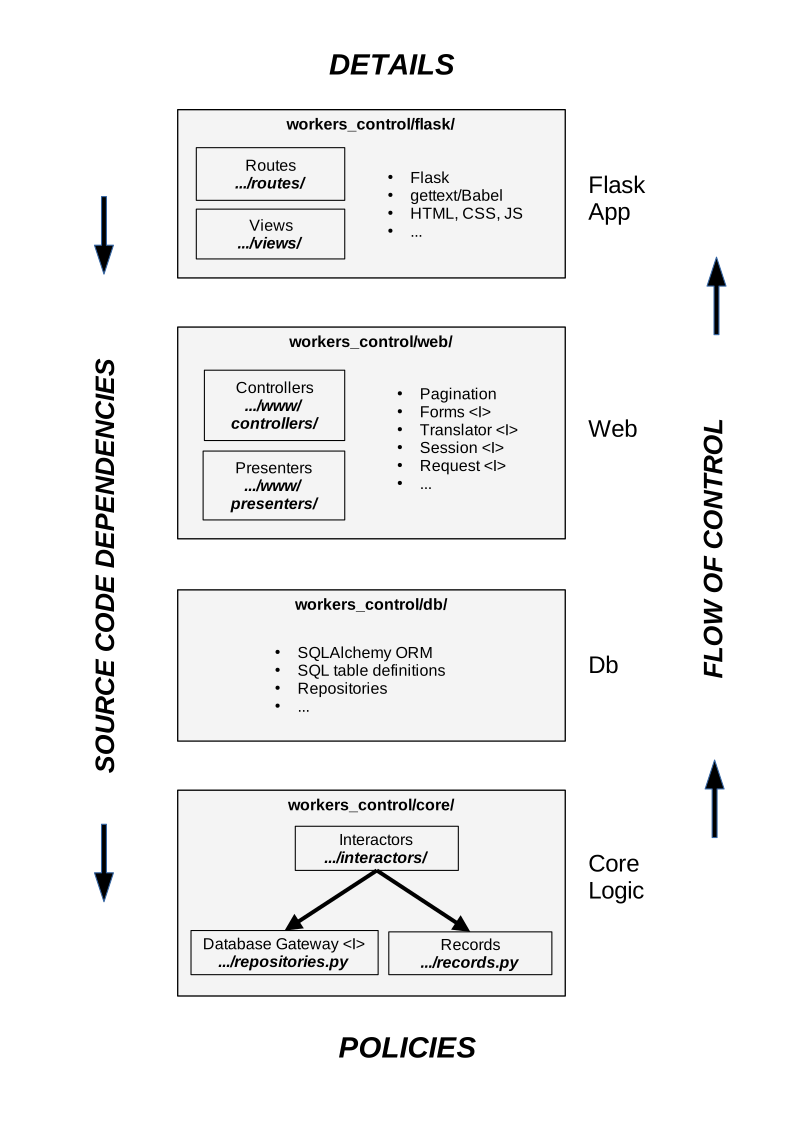
The architecture of the program is modeled after the principles of Clean Architecture (Robert C. Martin, Clean Architecture, Pearson, 2018). Here is a small overview of the most important directories in the source code.
src/workers_control/core/Contains the business logic of the program. A useful heuristic for deciding whether your code belongs there is “Would my code still make sense if this app were a CLI application without a SQL database?” Use case “interactors” implement the business logic. They make use of the “Database Gateway” interface to persist and retrieve data. “Records” are business-level data structures.
src/workers_control/web/Contains the code for implementing the Web interface. The code in this directory should format and translate strings for display to the user and parse input data from forms and URLs. This code is completly framework agnostic and is only concerned with engaging the business logic through the develivery mechanism of the World Wide Web.
src/workers_control/db/The concrete implementation for persistence. Currently we support Postgres and SQLite databases via SQLAlchemy.
src/workers_control/flask/Contains the conrete implementation for IO. We use the
flaskframework.tests/Contains all the tests. You should find at least one test for every line of code in the other directories in here.
Here is a diagram that shows the main components of the application: